


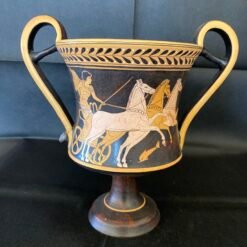
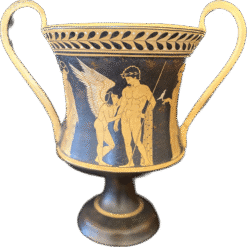
Attic red-figure dinoid volute krater and stand
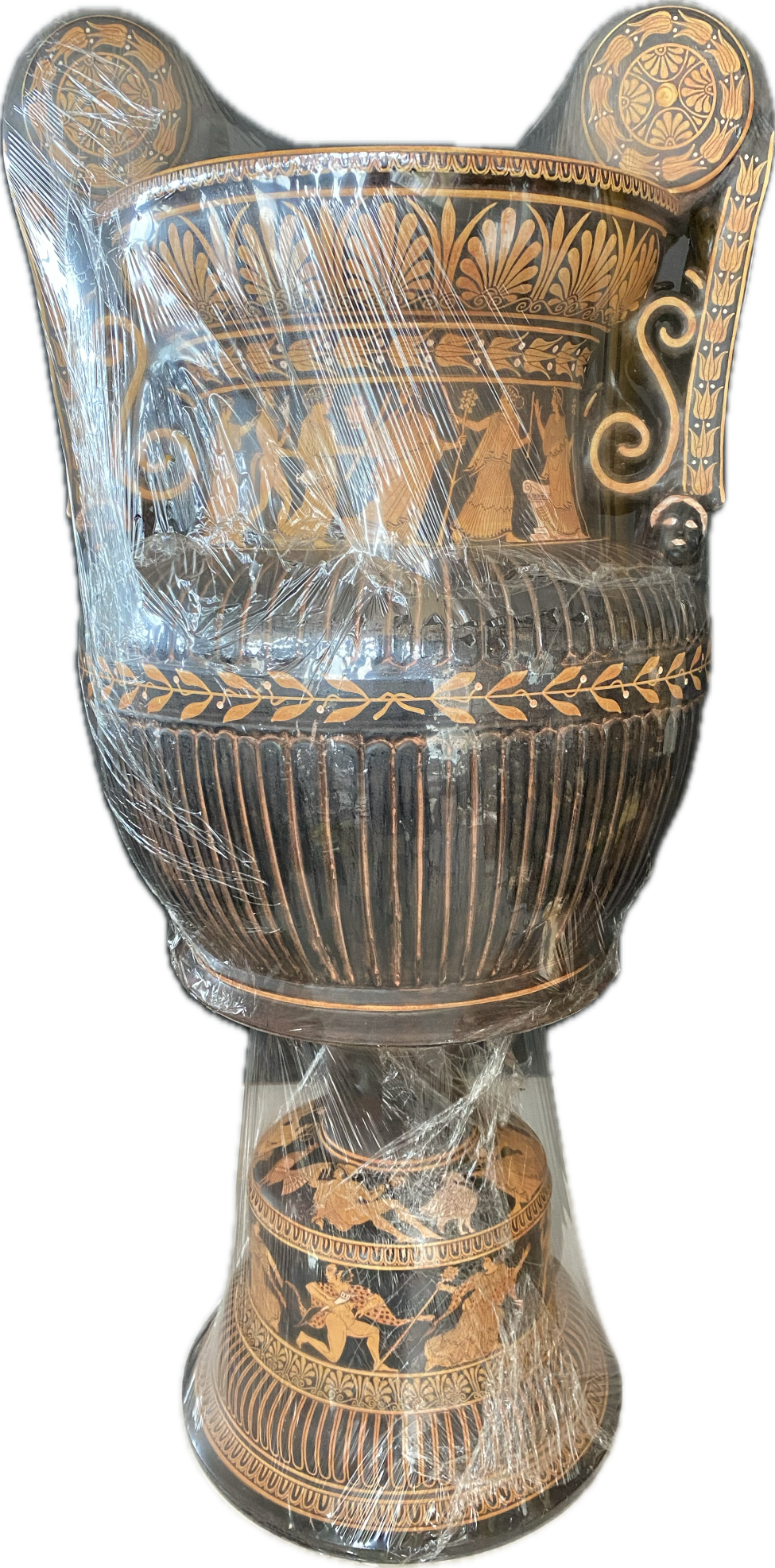
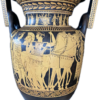
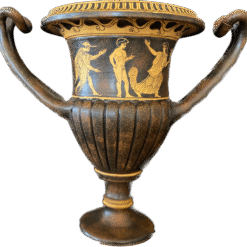
On one side of the neck of this mixing bowl (krater), the mythical Adonis reclines on a couch, with a diminutive figure of Eros perched before him holding a dish of fruits. On either side are Aphrodite, the goddess of love, and Persephone, the queen of the Underworld, with their female attendants. Aphrodite fell in love with the handsome Adonis, but he was killed during a boar hunt soon after. The goddess was so distraught that Zeus, the king of the gods, made the youth immortal, allowing him to leave Hades, the underworld of the dead, for part of the year to be with Aphrodite. He always, however, had to return to Hades, where he was Persephone’s lover. This cycle of death and rebirth was linked to the regeneration of vegetation and the crop seasons in ancient Greece. Adonis was of Phoenician origin, and his cult was introduced to Athens in about 440 B.C.; its devotees were exclusively female.
The other side of the krater’s neck shows a scene from a symposium, or drinking party, in which three pairs of men (one beardless and youthful, the other bearded and mature) recline on couches. Cakes and fruit stand on the tables before them, and the central youth swings his cup for the game of kottabos, in which participants cast the dregs of their wine at a target.
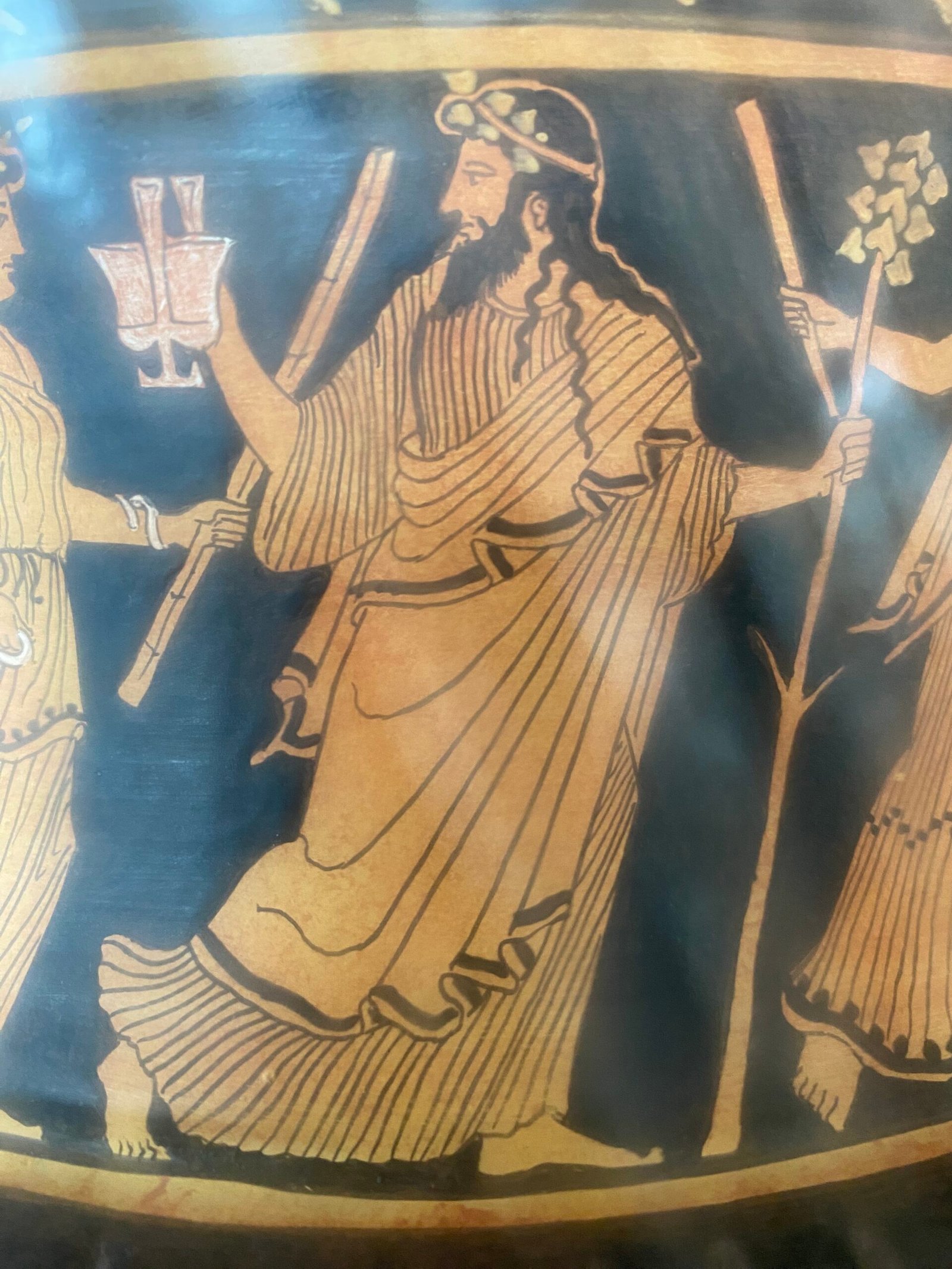
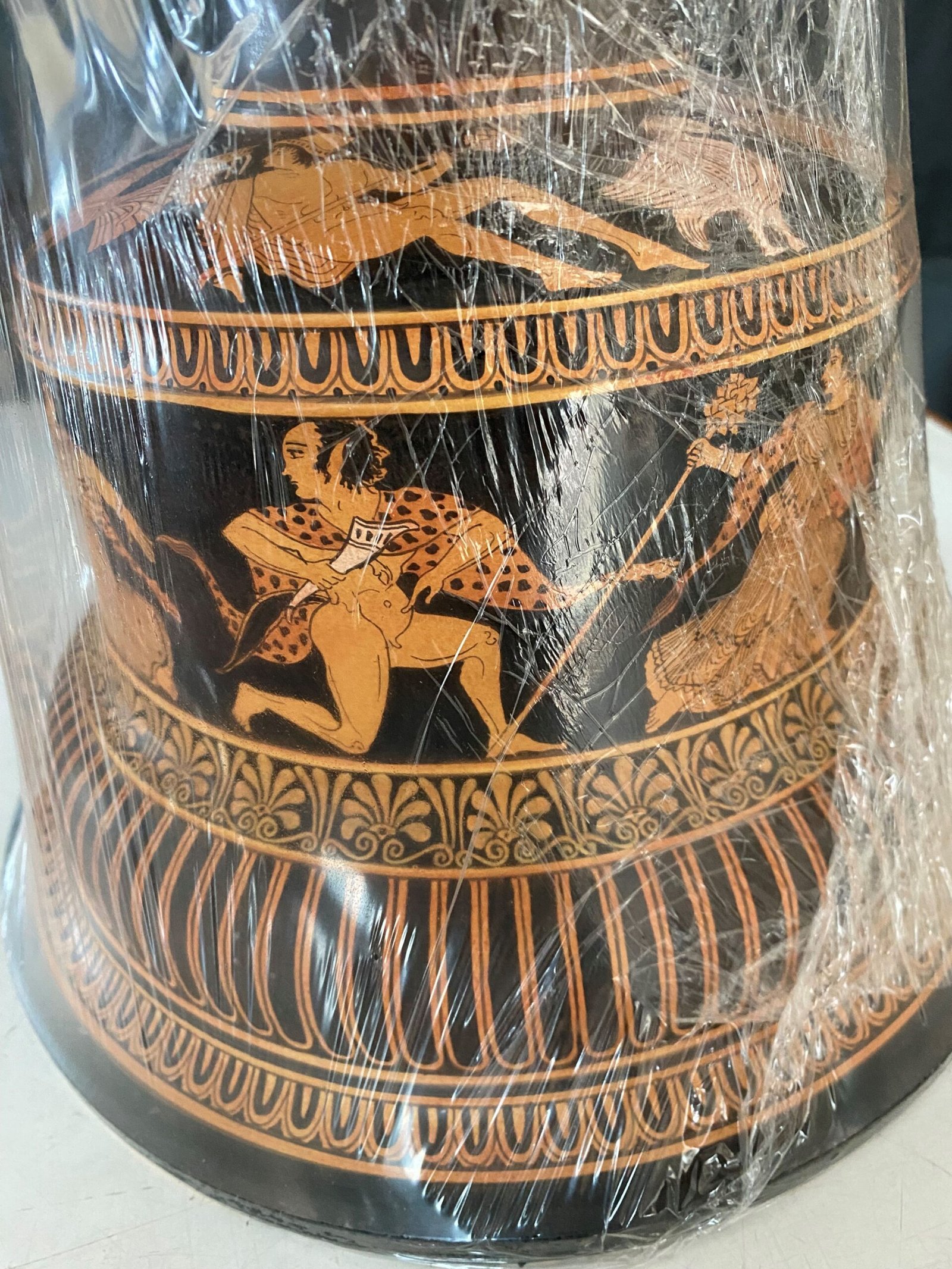
The bowl rests upon an elaborate stand, the missing part of which has been reconstructed. Decorating the upper surface of the base is a series of hunts featuring both real and mythological animals (deer, bull, hare, griffins). Running around the side is a scene of Dionysos and his entourage. The god of wine holds out a drinking vessel as he reclines on a couch, and Eros stands before him. Dionysos is accompanied by a group of satyrs and maenads, who dance, cavort, or in one case, attempt to catch a hare. The two figures striding arm in arm at the head of the procession have been seen as Apollo leading Sabazios, a Phrygian divinity associated with Dionysos and Zeus.
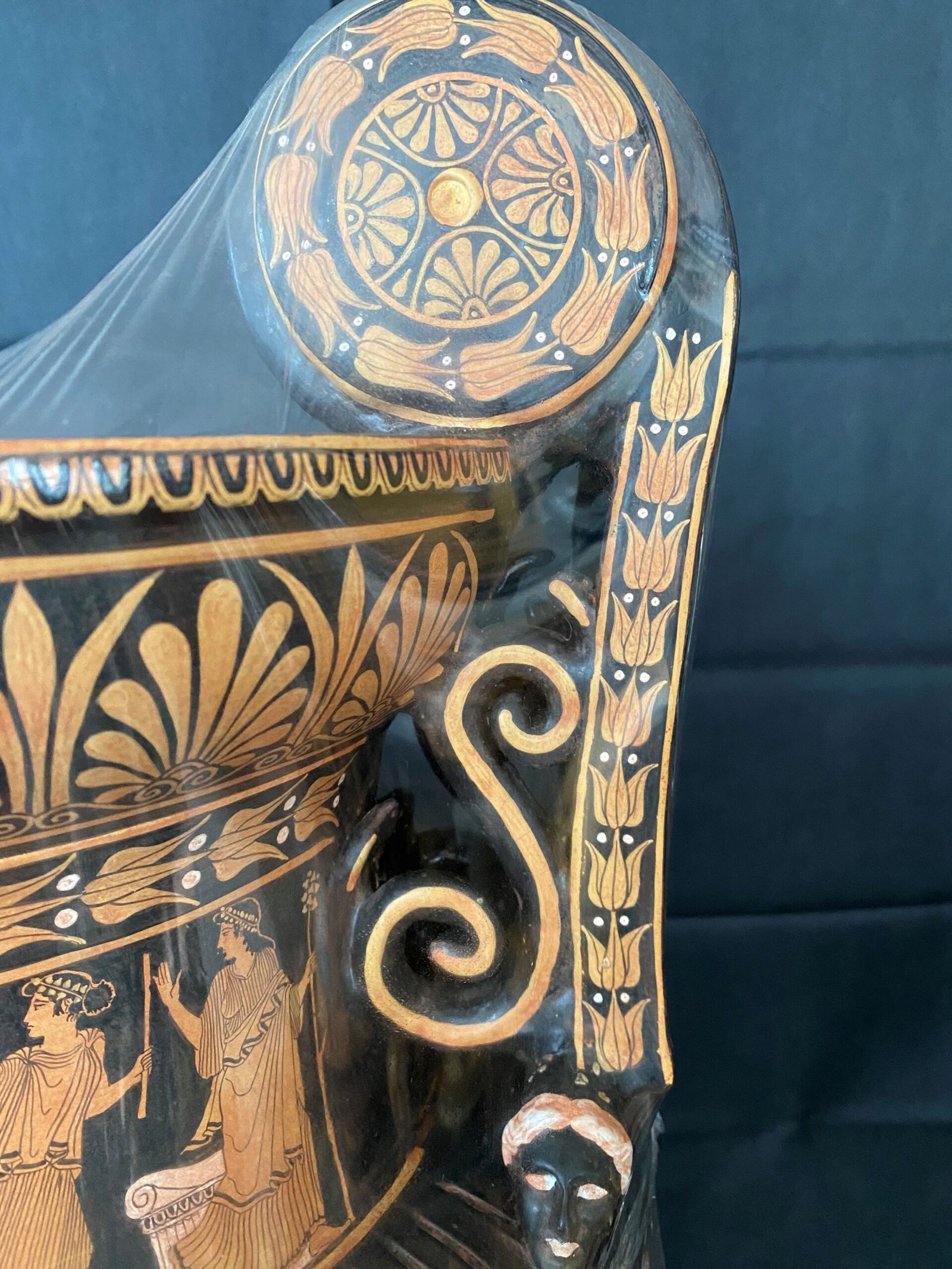
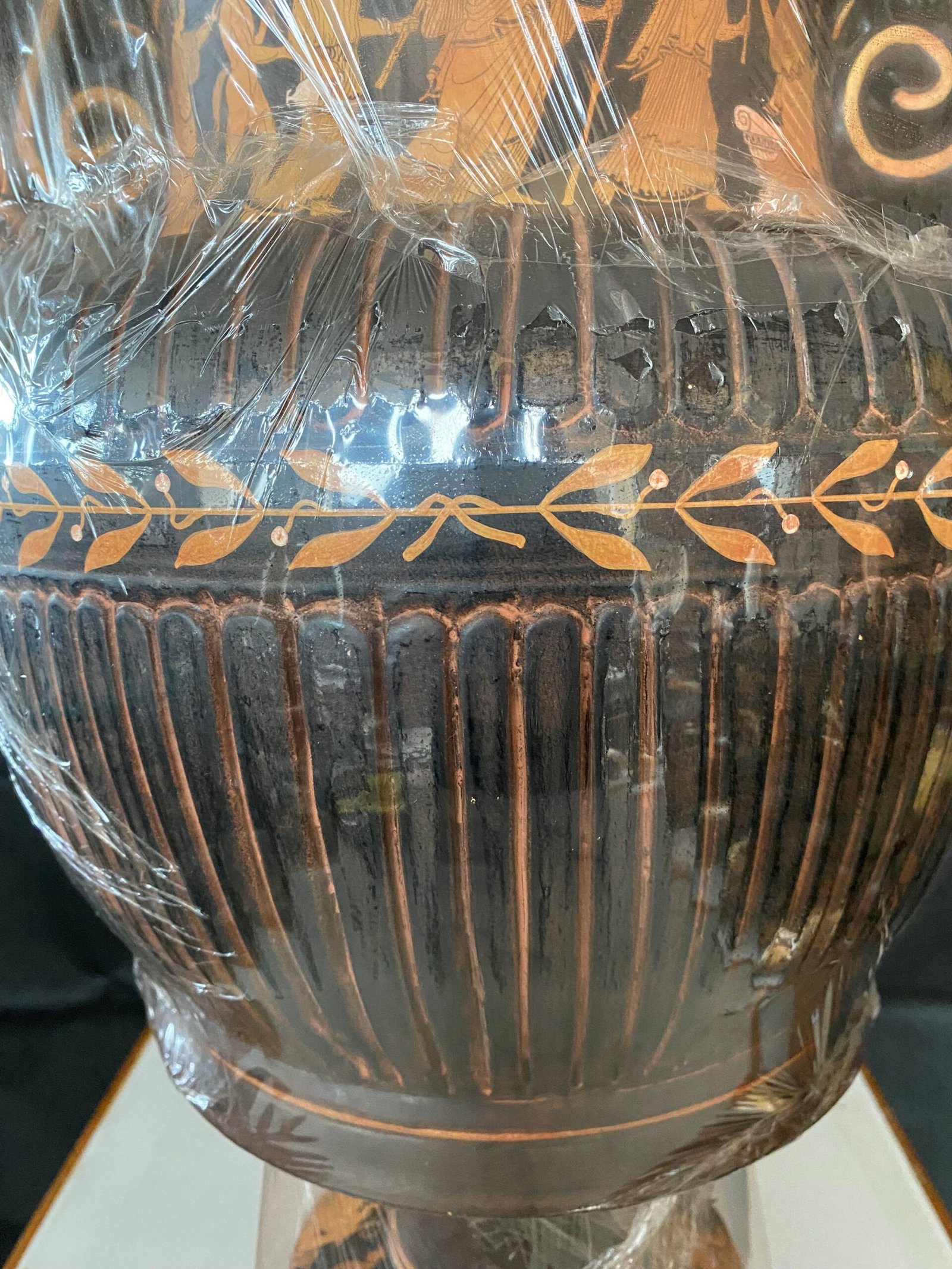
Many aspects of this vessel, notably the ribbing on the surface of the bowl and the ornate handles, are more typical of vases produced in South Italy than in Athens, perhaps indicating that it was made for export to that area. Added clay relief was used for the ivy pattern just below the mouth on side A, as well as the wreath of olive leaves that encircles the bowl, while at the junction between the body and the base of each handle is a small sculptural head of a Black African youth – a popular image in Southern Italy during the fourth century, found also on gems and jewelry. Many details are also embellished with gilding, such as the hair of the Black African youths, the bracelets, earrings, and necklaces worn by the figures in the painted scenes, and the minuscule frontal female faces at the center of each handle. For the krater’s ancient owner, all of these features would have lent a luxurious appeal, evoking the more costly creations of silversmiths and metalworkers.
The decoration with the anthems on both the upper and lower zones of the vase gives it a majestic style, such that it implies the high position that its owner held in ancient society.
Circa 390 – 380 B.C
Getty Museum.
| Weight | 15,700 kg |
|---|---|
| Dimensions | 38 × 32 × 78 cm |
Only logged in customers who have purchased this product may leave a review.
Related products
Athenian red figured period
Athenian red figured period
Athenian red figured period

Athenian red figured period
Athenian red figured period
Athenian red figured period
Athenian red figured period
Athenian red figured period
Reviews
There are no reviews yet.